Understanding Closing Costs: Know What to Expect Before You Buy or Sell
Closing costs are among the most misunderstood aspects of a real estate transaction.
Many buyers focus only on the down payment. Many sellers focus only on the sales price. But when it comes time to close, there are additional fees, prepaid expenses, prorations, commissions, lender charges, attorney fees, taxes, insurance, and other costs that can affect the final numbers.
That is why it is so important to understand closing costs before you get to the closing table.
At Buy Georgia Realty, we believe education matters. The more you understand upfront, the more confident you can feel when buying or selling a home in Georgia.
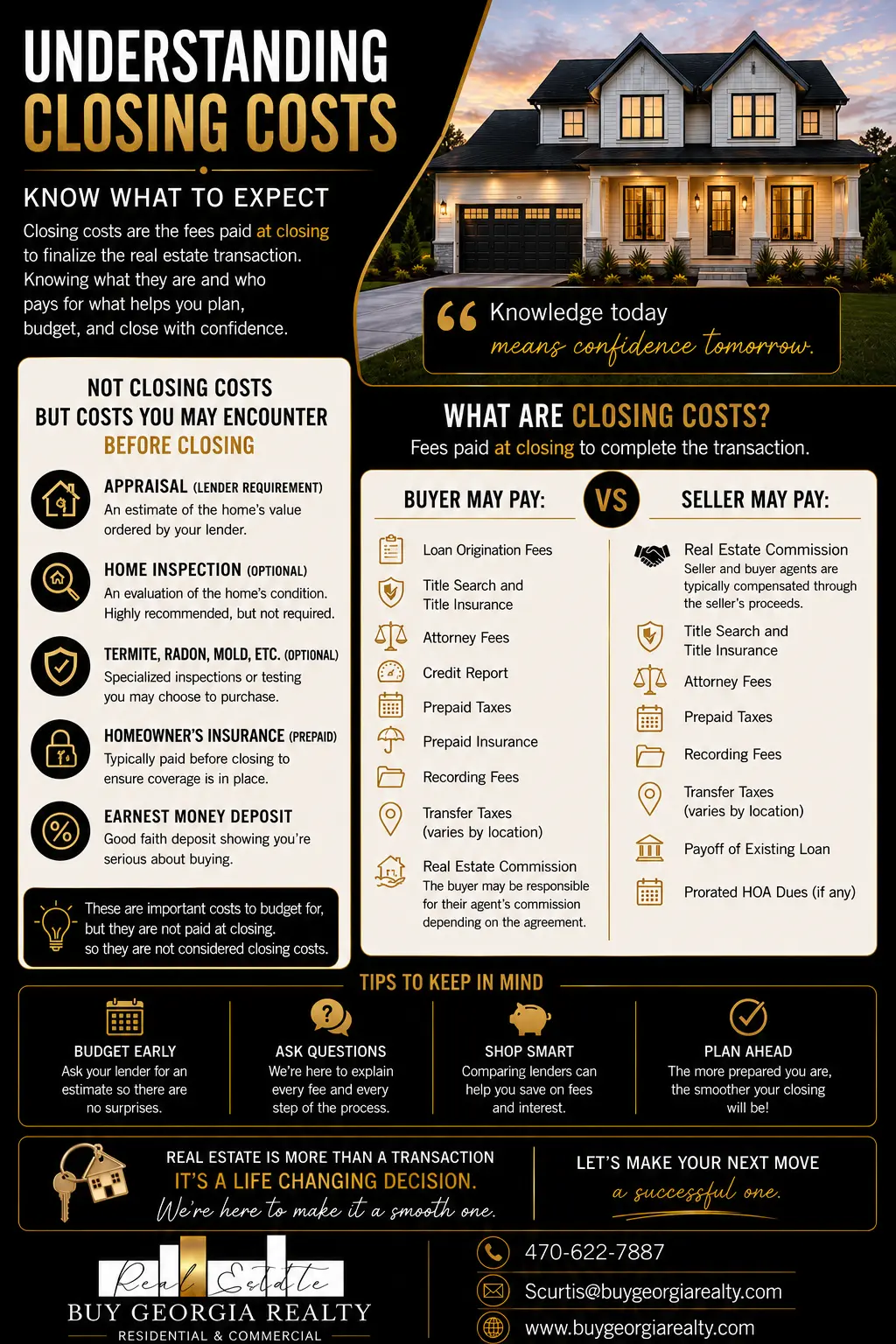
What Are Closing Costs?
Closing costs are the fees and expenses paid to finalize a real estate transaction.
These costs can be paid by the buyer, the seller, or negotiated between the parties, depending on the contract, loan type, local customs, and what is agreed in writing.
Closing costs may include lender fees, title fees, attorney fees, recording fees, prepaid taxes, prepaid insurance, real estate commissions, and other transaction-related charges.
The exact amount depends on several factors, including:
-
Purchase price
-
Loan type
-
Lender fees
-
Property taxes
-
Insurance costs
-
Closing date
-
Contract terms
-
Seller concessions
-
Location
-
HOA dues, if applicable
-
Existing loan payoff, if selling
No two closings are exactly the same, which is why buyers and sellers need to review their estimated numbers early.
Buyer Closing Costs
Buyers usually have costs connected to their loan, title work, attorney fees, prepaid expenses, inspections, and the purchase itself.
Common buyer costs may include:
-
Loan origination fees
-
Lender processing fees
-
Credit report fee
-
Appraisal fee
-
Title search
-
Title insurance
-
Attorney fees
-
Recording fees
-
Prepaid property taxes
-
Prepaid homeowner’s insurance
-
Escrow setup
-
HOA transfer or initiation fees, if applicable
-
Buyer agent compensation, depending on the agreement
-
Survey, if required or requested
-
Discount points, if buying down the interest rate
A buyer’s lender should provide a Loan Estimate early in the process and a Closing Disclosure before closing. These documents help show estimated and final loan-related costs.
But even with those documents, buyers should ask questions. If you do not understand a fee, ask. You deserve to know what you are paying and why.
Seller Closing Costs
Sellers also have costs when selling a property.
Common seller costs may include:
-
Mortgage payoff
-
Real estate commission
-
Seller-paid buyer concessions, if negotiated
-
Attorney fees
-
Title-related fees
-
Recording fees
-
Transfer taxes
-
Prorated property taxes
-
HOA dues or transfer fees, if applicable
-
Repairs or repair credits, if negotiated
-
Home warranty, if agreed upon
-
Lien payoffs, if any
-
Forbearance repayment or second mortgage payoff, if applicable
This is why sellers should never assume the contract price is the amount they will walk away with.
Your sales price and your net proceeds are two very different numbers.
Before listing, sellers should review their mortgage payoff, any second liens, HOA balances, taxes, possible concessions, commission, and other closing expenses to avoid surprises later.
Costs You May Encounter Before Closing
Not every expense is technically a “closing cost.”
Some costs may happen before closing but still need to be budgeted for.
These may include:
Appraisal
If the buyer is using financing, the lender will usually require an appraisal. The appraisal is an estimate of the home’s value ordered through the lender process.
Home Inspection
A home inspection is typically optional but highly recommended. It helps the buyer understand the property's condition before moving forward.
Termite, Radon, Mold, Septic, Well, or Specialty Inspections
Depending on the property, buyers may choose or need additional inspections. Land, rural homes, older properties, and homes with septic or wells may require extra due diligence.
Homeowner’s Insurance
Buyers typically need homeowner’s insurance in place before closing if they are using a loan. This may be paid before closing or included in prepaid items, depending on the lender and insurance setup.
Earnest Money Deposit
Earnest money is a good-faith deposit showing the buyer is serious. It is usually credited back to the buyer at closing, but buyers need to understand when it is due and what contract terms could put it at risk.
Due Diligence Fee or Costs
In Georgia, buyers often have a due diligence period. During that time, they may spend money on inspections, estimates, surveys, septic evaluations, or other research before deciding whether to move forward.
Can Closing Costs Be Negotiated?
Some closing costs are fixed. Some are lender-specific. Some are negotiable. Some can be paid by either party depending on the agreement.
For example, a buyer may ask the seller to contribute toward closing costs. This is often referred to as seller concessions or seller-paid closing costs.
A seller may agree, reject, or counter that request depending on the strength of the offer, market conditions, loan type, and net proceeds.
In some situations, asking for seller-paid closing costs can help a buyer purchase a home with less cash needed at closing. In other situations, it may make an offer less competitive if there are multiple buyers.
This is where strategy matters.
A good real estate agent can help you understand how closing cost requests may affect your offer or your bottom line.
Why Buyers Need to Budget Early
One of the biggest mistakes buyers make is only saving for the down payment.
The down payment is only one part of the money needed to buy a home.
Buyers may also need money for:
-
Earnest money
-
Inspections
-
Appraisal
-
Closing costs
-
Prepaid insurance
-
Moving expenses
-
Utility setup
-
Repairs or updates after closing
-
Furniture or appliances, if needed
Before shopping for homes, buyers should speak with a lender and ask for a realistic estimate of cash needed to close.
The goal is not to scare you.
The goal is to prepare you.
Prepared buyers make better decisions.
Why Sellers Need to Know Their Net
Sellers should not wait until the final closing statement to understand their numbers.
Before listing, sellers should request an estimated net sheet showing what they may walk away with after paying off debts and expenses.
This is especially important if the seller has:
-
A mortgage payoff
-
A second mortgage
-
A home equity line
-
Forbearance balance
-
Tax lien
-
HOA lien
-
Judgment lien
-
Past-due dues
-
Repair issues
-
A need for seller concessions
-
A tight equity position
A seller may think they are walking away with a certain amount, only to find out later that expenses, payoffs, or liens change everything.
Knowing your numbers early helps you make better decisions.
Common Closing Cost Questions
How much are closing costs?
It depends. Closing costs vary based on the price, loan, lender, location, taxes, insurance, and contract terms. A lender and closing attorney can provide more specific numbers once the transaction details are known.
Can the seller pay the buyer’s closing costs?
Yes, if agreed upon in the contract and allowed by the buyer’s loan program. However, there may be limits depending on the loan type and buyer situation.
Are inspections part of closing costs?
Usually inspections are paid before closing and are not always considered closing costs, but they are still important expenses buyers should budget for.
Does the seller pay commission?
The real estate commission is negotiable and is paid in accordance with the listing agreement and purchase agreement. Sellers, buyers, or both may be responsible, depending on what is agreed upon.
Who explains the final numbers?
The lender, closing attorney, and real estate agent all play a role. Buyers should review their Loan Estimate and Closing Disclosure with their lender. Sellers should review their estimated net sheet and settlement statement with the closing attorney and agent.
Tips to Keep in Mind
Budget Early
Do not wait until the last minute to ask what money you need. Buyers and sellers both need to understand their estimated costs early in the process.
Ask Questions
If you do not understand a fee, ask. Real estate has too many moving parts to stay silent and hope it makes sense later.
Shop Smart
Buyers may compare lenders. Fees, rates, service, communication, and loan programs can vary. The cheapest option is not always the best, but you should understand your options.
Plan Ahead
The more prepared you are, the smoother your closing can be.
Real Estate Is More Than a Transaction
Buying or selling a home is a life-changing decision.
Closing costs are just one part of the bigger picture, but they matter because they affect your budget, your offer, your net proceeds, and your confidence.
At Buy Georgia Realty, we help buyers and sellers throughout North Metro Georgia and Northwest Georgia understand the process from start to finish.
We serve Dallas, Paulding County, Cobb County, Bartow County, Cherokee County, Carroll County, Polk County, Cartersville, Acworth, Kennesaw, Hiram, Rockmart, Cedartown, Carrollton, Villa Rica, Taylorsville, and surrounding communities.
You should never feel confused at the closing table.
You deserve guidance before you get there.
Ready to Buy or Sell in Georgia?
Whether you are buying your first home, selling your current home, relocating, downsizing, or trying to understand what your next move may cost, Buy Georgia Realty is here to help.
Call 470-622-7887 or visit www.buygeorgiarealty.com.
Let’s make your next move a successful one.
Categories
- All Blogs (121)
- Advocate (9)
- Appraisals (4)
- Avoiding Probate (1)
- Brokerage (13)
- Building (2)
- Buying (58)
- Career (1)
- Closing Insurance (1)
- Commercial (2)
- Commission (2)
- Compensation (1)
- Cortney Michelle (1)
- Decor (1)
- Divorce (2)
- Divorce Decree (1)
- Due Diligence (2)
- DYI (1)
- Embracing the Downsizing Journey (5)
- Enhancing Appeal through Upgrades and Staging (2)
- Equity (2)
- Estate Planning (2)
- Exploring Retirement Living Options (1)
- FHA (3)
- Financing & Mortgage Tips (3)
- First Time Buying (16)
- Friendship (3)
- Georgia Real Estate (33)
- Georgia, USA (38)
- Growing (3)
- Hidden Protection (9)
- Highlighting Unique Features (2)
- HOA (4)
- Holiday Events (3)
- Home Inspection (7)
- Home Maintenance (5)
- Homebuyer Education (5)
- Homeowner Protection (17)
- Homeownership (43)
- Insurance (3)
- Janae Garrett (1)
- Land Trust (1)
- Lease Negotiation (2)
- Lender's Title Insurance (1)
- Lending (10)
- Licensed and Insured (1)
- Market (19)
- Marriage (1)
- Melissa St. Germain (1)
- Mortgage (5)
- Moving (11)
- NAR Settlement (2)
- New Home Journey (14)
- Owner's Title Insurance (1)
- Packing (2)
- Paulding, GA (1)
- Professional Advice (20)
- Property Damage (1)
- Property Taxes (4)
- Quitclaim Deed (1)
- Real Estate (55)
- Real Estate Closing Attorney (5)
- Relocation (15)
- Renee Sneed (1)
- Research and Review (5)
- Retirement Living (3)
- Sales and Acquisitions (4)
- Selling (29)
- Senior Home Solutions (4)
- Senior Housing (3)
- Seniors (4)
- Smart Pricing and Incentives (1)
- Summer (3)
- Title Search (2)
- Transfer Ownership Rights (1)
- VA Home Buying (4)
- VA Loans (1)
- Zoning (2)
Recent Posts










GET MORE INFORMATION