Home Inspections: Know Before You Close
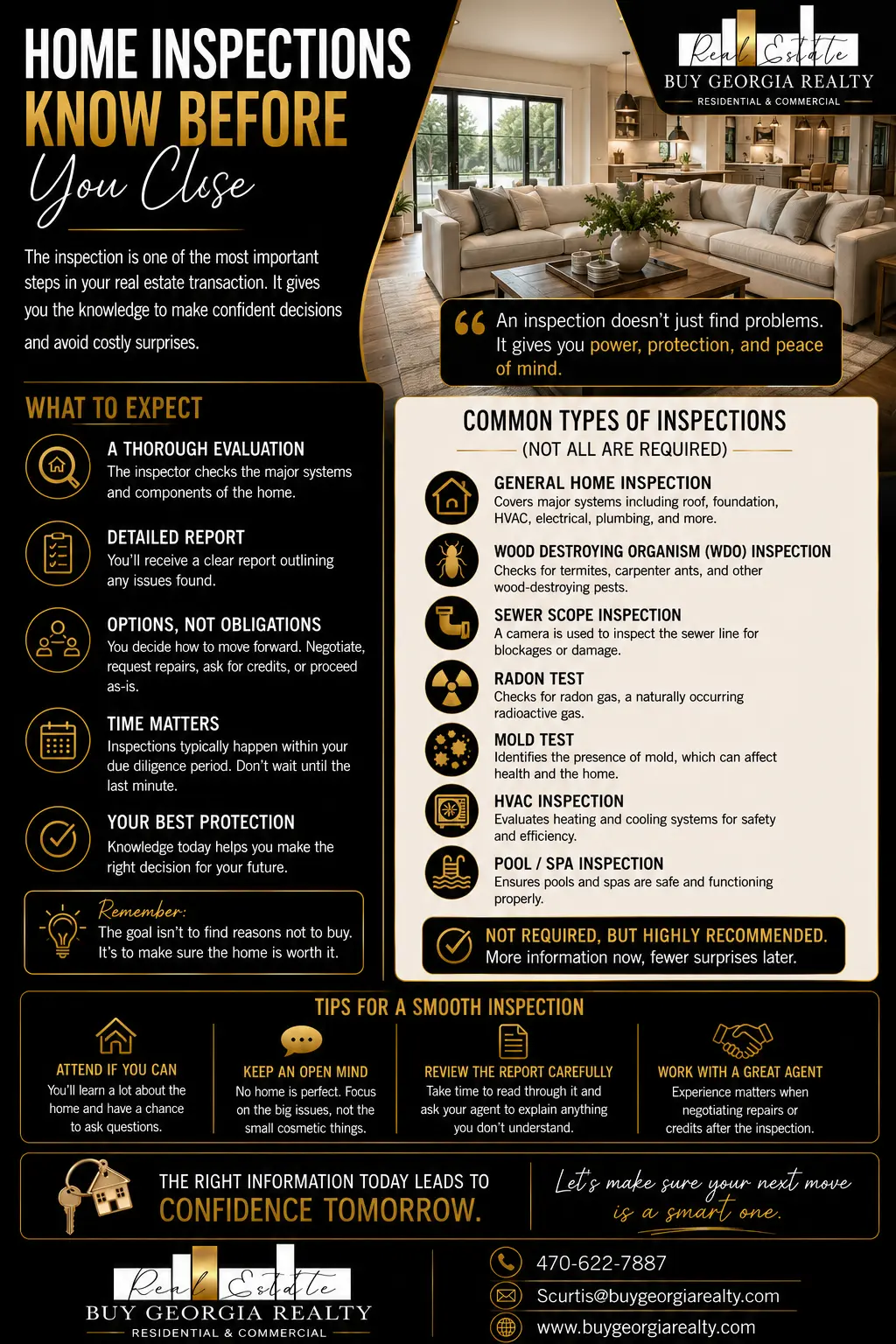
A home inspection is one of the most important steps in the home-buying process.
Buying a home is exciting, but excitement should never replace information. A house can look beautiful in photos, feel perfect during a showing, and still have issues that are not obvious to the average buyer.
That is why inspections matter.
A home inspection gives buyers the knowledge they need to make confident decisions before moving forward. It is not about finding reasons not to buy. It is about understanding what you are buying before you sign the final papers and take ownership.
At Buy Georgia Realty, we believe informed buyers are protected.
What Is a Home Inspection?
A home inspection is a professional evaluation of a property’s visible condition.
A general home inspector typically reviews the home's major systems and components, including the roof, foundation, exterior, attic, plumbing, electrical, HVAC, windows, doors, appliances, drainage, safety items, and more.
The inspector does not tear into walls or guarantee that everything is perfect. Instead, they provide a detailed report showing visible concerns, potential defects, maintenance items, safety issues, and areas that may need further evaluation.
This report helps buyers better understand the home before deciding how to move forward.
Why Home Inspections Matter
A home inspection gives you power, protection, and peace of mind.
It helps you avoid walking blindly into one of the largest purchases of your life. Even if the home is newer, updated, or looks well-maintained, an inspection can reveal issues that may affect your budget, safety, comfort, or negotiation strategy.
The right information today can help you make a better decision for your future.
What to Expect During a Home Inspection
A Thorough Evaluation
The inspector will check visible systems and components of the home. This may include the roof, attic, foundation, crawlspace, basement, electrical panel, plumbing, HVAC, windows, exterior, interior, grading, drainage, and appliances.
The goal is to help you understand the property's condition.
A Detailed Report
After the inspection, the buyer receives a written report with photos, explanations, and findings. Some reports may feel overwhelming because they include everything from major concerns to small maintenance items.
That is normal.
No home is perfect, not even new construction.
The key is learning what matters, what is minor, what may need further evaluation, and what could affect your decision.
Options, Not Obligations
After reviewing the inspection report, the buyer may have options depending on the contract terms and timeline.
You may decide to:
-
Move forward as-is
-
Ask the seller for repairs
-
Ask for a repair credit or seller concession
-
Request further evaluation from specialists
-
Renegotiate terms
-
Terminate during your allowed contract period, if applicable
Your options depend on your contract, due diligence period, loan type, and the specific situation.
Time Matters
In Georgia, inspections typically happen during the due diligence period. That means buyers need to schedule inspections quickly after going under contract.
Do not wait until the last minute.
If additional inspections or contractor estimates are needed, you want enough time to gather information and make a smart decision before deadlines expire.
Common Types of Inspections
Not every inspection is required, but many are worth considering depending on the property.
General Home Inspection
This is the most common inspection. It covers major systems and components, including the roof, foundation, HVAC, electrical, plumbing, appliances, interior, exterior, attic, and more.
Wood Destroying Organism Inspection
A WDO inspection checks for termites, carpenter ants, and other wood-destroying organisms. In Georgia, this can be especially important because termites are common and can cause expensive damage if ignored.
Sewer Scope Inspection
A sewer scope uses a camera to inspect the sewer line for blockages, cracks, roots, collapses, or damage. This may be especially important for older homes or properties with mature trees.
Septic Inspection
If the home is on septic, buyers should strongly consider a septic inspection. Septic repairs can be expensive, and buyers need to understand the system's condition and location.
Well Water Inspection
If the property uses a well, buyers may want water quality testing and well system evaluation.
Radon Test
Radon is a naturally occurring radioactive gas. Testing can help determine whether elevated radon levels are present in the home.
Mold Test
Mold testing may be helpful if there are signs of moisture, leaks, musty smells, staining, or prior water intrusion.
HVAC Inspection
A licensed HVAC professional can evaluate heating and cooling systems in greater depth than a general inspector. This can help buyers understand age, function, safety, maintenance, and potential replacement concerns.
Roof Inspection
If the roof appears older, damaged, or questionable, a roof inspection from a roofing professional may be helpful.
Pool or Spa Inspection
If the property has a pool or spa, a specialized inspection can help determine whether the equipment, structure, and systems are functioning properly.
Not Required, But Highly Recommended
Some inspections may not be required by your lender or contract, but that does not mean they are unnecessary.
Inspections are about information.
The more you know before closing, the fewer surprises you may face after moving in.
Skipping inspections may save money upfront, but it can cost much more later if major problems are discovered after closing.
Should You Attend the Inspection?
If you can, yes.
Attending the inspection gives you the chance to learn more about the home, ask questions, and see concerns firsthand. You may also learn where important items are located, such as shut-off valves, filters, panels, and maintenance areas.
Even if you cannot attend the full inspection, try to be there for the inspector’s summary at the end.
That conversation can be very helpful.
Keep an Open Mind
Inspection reports can feel scary because they often include a long list of findings.
Remember, the goal is not perfection.
Every home has something. Even brand-new homes can have issues.
The important thing is to separate major concerns from normal maintenance, cosmetic items, and small repairs.
A good agent can help you review the report, ask better questions, and decide what may be worth addressing.
Review the Report Carefully
Do not just skim the inspection report.
Read it carefully. Look at the photos. Ask questions. Request clarification if something does not make sense.
Some findings may need further evaluation by a licensed professional, such as an electrician, plumber, roofer, HVAC technician, structural engineer, septic company, or pest company.
The inspection report is a tool. Use it wisely.
Work With a Great Agent
Inspections are where experience matters.
A strong buyer’s agent helps you understand your options, stay within your contract deadlines, communicate with the other side, and negotiate repairs or credits when appropriate.
Your agent should not pretend to be the inspector, contractor, or attorney, but they should help guide the process and connect the dots.
At Buy Georgia Realty, we help buyers understand what the inspection report means for the transaction and how to move forward with confidence.
What Happens After the Inspection?
After the inspection, the buyer and agent typically review the report and decide what comes next.
Depending on the findings and contract terms, the buyer may request repairs, seek seller concessions, request further evaluations, or proceed without any requests.
The seller may agree, counter, reject, or offer another solution.
This part of the process requires strategy. Not every item is worth fighting over, and not every concern should be ignored.
The goal is to protect the buyer while keeping the transaction moving in a reasonable and informed way.
Inspections Can Save Money and Stress
A home inspection can help prevent costly surprises after closing.
It may reveal:
-
Roof concerns
-
HVAC age or defects
-
Electrical hazards
-
Plumbing leaks
-
Drainage issues
-
Foundation concerns
-
Moisture intrusion
-
Termite damage
-
Safety issues
-
Poor repairs
-
Appliance problems
-
Septic or sewer concerns
Even if the inspection does not uncover major issues, it can still give you confidence that you are making an informed decision.
That peace of mind matters.
The Right Information Today Leads to Confidence Tomorrow
Buying a home should be exciting, but it should also be smart.
A home inspection helps you understand the property, prepare for future maintenance, and make decisions based on facts instead of fear.
At Buy Georgia Realty, we believe our clients deserve guidance, education, and protection throughout the process.
We serve buyers throughout North Metro Georgia and Northwest Georgia, including Dallas, Paulding County, Cobb County, Bartow County, Cherokee County, Carroll County, Polk County, Acworth, Kennesaw, Cartersville, Hiram, Rockmart, Cedartown, Carrollton, Villa Rica, Taylorsville, and surrounding communities.
Buying a Home in Georgia?
Before you close, know what you are buying.
If you are thinking about buying a home in North Metro Georgia or Northwest Georgia, Buy Georgia Realty would love to help guide you through the process from search to closing.
Call 470-622-7887 or visit www.buygeorgiarealty.com.
Let’s make sure your next move is a smart one.
Categories
- All Blogs (121)
- Advocate (9)
- Appraisals (4)
- Avoiding Probate (1)
- Brokerage (13)
- Building (2)
- Buying (58)
- Career (1)
- Closing Insurance (1)
- Commercial (2)
- Commission (2)
- Compensation (1)
- Cortney Michelle (1)
- Decor (1)
- Divorce (2)
- Divorce Decree (1)
- Due Diligence (2)
- DYI (1)
- Embracing the Downsizing Journey (5)
- Enhancing Appeal through Upgrades and Staging (2)
- Equity (2)
- Estate Planning (2)
- Exploring Retirement Living Options (1)
- FHA (3)
- Financing & Mortgage Tips (3)
- First Time Buying (16)
- Friendship (3)
- Georgia Real Estate (33)
- Georgia, USA (38)
- Growing (3)
- Hidden Protection (9)
- Highlighting Unique Features (2)
- HOA (4)
- Holiday Events (3)
- Home Inspection (7)
- Home Maintenance (5)
- Homebuyer Education (5)
- Homeowner Protection (17)
- Homeownership (43)
- Insurance (3)
- Janae Garrett (1)
- Land Trust (1)
- Lease Negotiation (2)
- Lender's Title Insurance (1)
- Lending (10)
- Licensed and Insured (1)
- Market (19)
- Marriage (1)
- Melissa St. Germain (1)
- Mortgage (5)
- Moving (11)
- NAR Settlement (2)
- New Home Journey (14)
- Owner's Title Insurance (1)
- Packing (2)
- Paulding, GA (1)
- Professional Advice (20)
- Property Damage (1)
- Property Taxes (4)
- Quitclaim Deed (1)
- Real Estate (55)
- Real Estate Closing Attorney (5)
- Relocation (15)
- Renee Sneed (1)
- Research and Review (5)
- Retirement Living (3)
- Sales and Acquisitions (4)
- Selling (29)
- Senior Home Solutions (4)
- Senior Housing (3)
- Seniors (4)
- Smart Pricing and Incentives (1)
- Summer (3)
- Title Search (2)
- Transfer Ownership Rights (1)
- VA Home Buying (4)
- VA Loans (1)
- Zoning (2)
Recent Posts








GET MORE INFORMATION